
Exploring the History of Puerto Rico’s Forts!
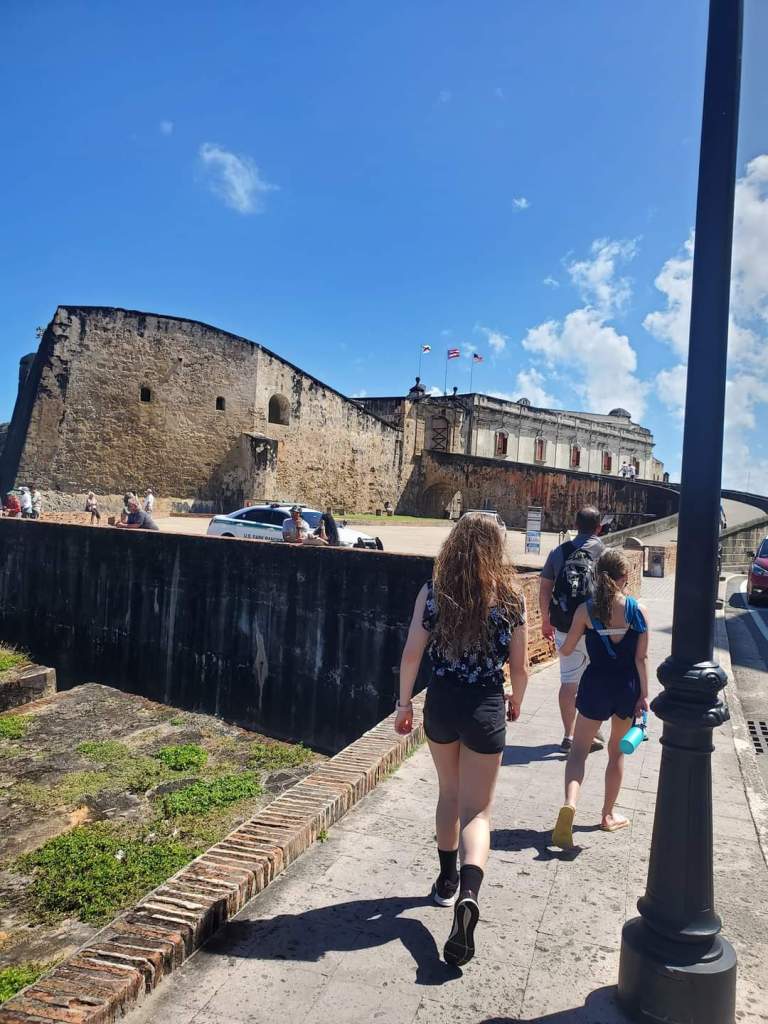
This past February, our family had the chance to visit Puerto Rico. When it comes to immersing your homeschooling curriculum in history, few experiences can rival the awe-inspiring journey through the El Morro and San Cristobal forts. These magnificent structures, both designated as UNESCO World Heritage Sites, hold within their walls centuries of stories, battles, and cultural significance that can bring the past alive for learners of all ages. Join us as we embark on a virtual exploration of these forts and discover engaging homeschooling resources and activities that can deepen your understanding of their historical importance.
El Morro
El Morro fort was built starting in 1539 to guard San Juan harbor from sea attacks. Its unique design features six levels of walls and batteries, along with tunnels and dungeons. We took a guided tour and learned how the fort was attacked by Sir Francis Drake in 1595 and later by the Dutch in 1625, but was never captured. The fort’s iconic lighthouse and sweeping views of the ocean made for stunning photos.
San Cristobal
San Cristobal fort was built after El Morro to protect against land attacks on the city. Completed by 1783, it is the largest fortification built by the Spanish in the New World. We explored the barracks, warehouses, and stable facilities where soldiers lived and worked. Climbing to the top outlook offered panoramic views of San Juan. The kids especially enjoyed exploring the tunnels and secret passageways.
Homeschooling Connections
Visiting El Morro and San Cristobal forts brings Puerto Rico’s history to life. Here are some ways to integrate a fort tour into homeschooling studies:
- Social Studies: Learn about Spanish colonial history, military architecture and strategy. Compare life as a soldier in 18th century Puerto Rico to careers today.
- Geography: Examine maps of the forts and San Juan. Discuss concepts like borders, coastlines and harbors. Plot the route of Sir Francis Drake’s attack.
- Writing: Have students imagine they are a Spanish soldier writing a diary entry about life at the fort. Or write a brochure persuading tourists to visit.
- STEM: Study the physics of cannons and calculation of projectile motion. Discuss how innovation in military technology shaped geopolitics.
Hands-On Activities
- Build a model fort out of cardboard boxes, popsicle sticks or LEGOs. Incorporate ramparts, bastions, batteries, walls, tunnels, etc.
- Hold a mock debate between British and Spanish leaders on controlling Caribbean territories. Have students research viewpoints and argue perspectives.
- Cook a Puerto Rican meal that soldiers at the fort may have eaten, like arroz con gandules, stewed chicken, and plantains.
Exploring El Morro and San Cristobal forts gave our homeschoolers an impactful understanding of Puerto Rico’s unique history and culture. The forts’ stunning architecture and scenic views made for an unforgettable educational adventure.
Looking for more?
Homeschooling Resources for El Morro:
- Virtual Tours: Take advantage of online resources that offer virtual tours of El Morro. Websites like Google Arts & Culture often provide detailed virtual explorations of historical sites, allowing learners to navigate the fort from the comfort of their homes.
- Historical Documents: Access historical documents related to El Morro’s construction, battles, and significance. Encourage students to analyze letters, maps, and accounts from different time periods to gain a deeper understanding of the fort’s history.
- Interactive Maps: Incorporate interactive maps that allow learners to trace the fort’s evolution. This can help students visualize changes in the structure and layout of El Morro over the centuries.
- Free Unit Study: Head over to Teachers pay Teachers for this free unit study on El Morro
Engaging Activities for El Morro:
- Build a Model: Using craft supplies, challenge your students to build a model of El Morro. This hands-on activity can provide insights into the fort’s architecture and layout.
- Write a Journal Entry: Encourage learners to put themselves in the shoes of a soldier stationed at El Morro during a specific historical period. Have them write a journal entry detailing their daily life, challenges, and experiences.
- Design a Tourist Brochure: Ask students to create a tourist brochure for El Morro, highlighting its historical significance, key features, and must-visit spots within the fort.
Unraveling the Legacy of San Cristobal Fort
San Cristobal Fort, known as Castillo San Cristobal, is another gem within Puerto Rico’s historical tapestry. Its construction aimed to provide additional defense for the city of San Juan, and it stands as the largest fortification built by the Spanish in the New World.
Homeschooling Resources for San Cristobal:
- Library Resources: Explore your local library or online databases for books, articles, and documentaries about San Cristobal Fort. These resources can offer in-depth insights into the fort’s role in various historical events.
- Historical Role-Play: Organize a historical role-play activity where students take on the roles of key figures involved in the construction and defense of San Cristobal. This can help them understand different perspectives and motivations.
- Architectural Analysis: Study the architectural features of San Cristobal and its unique design elements. Encourage students to research the reasons behind specific architectural choices.
- Free Unit Study: free worksheets about San Cristobal available here!
Engaging Activities for San Cristobal:
- Create a Time Capsule: Imagine that you’re living during the time when San Cristobal was built. Have students create a time capsule filled with items, drawings, and writings that represent that era.
- Debate Historical Decisions: Organize a debate where students discuss the strategic decisions made during the fort’s construction. Topics could include the choice of location, design innovations, and more.
- Storyboard the History: Working individually or in groups, ask students to create a visual storyboard illustrating the fort’s history. This can be a creative way to showcase different events and time periods.

 The Traveling Homeschool